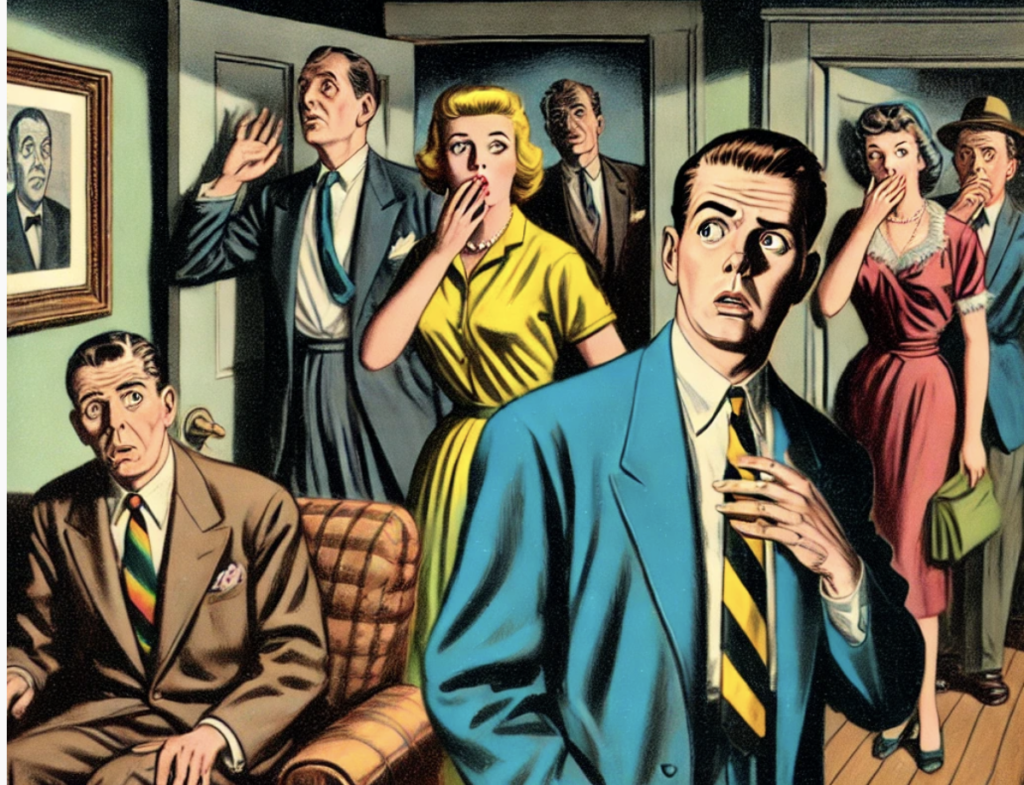
In the latest episode of ‘Stars & Stripes: Die Demokratie-Schmierenkomödie’ Republicans are grappling with a new identity crisis: they’ve been called “weird.”
***
Weird bedeutet seltsam, ungewöhnlich oder unkonventionell. Es kann Verhalten, Situationen oder Dinge beschreiben, die aus dem Gewöhnlichen herausfallen und oft unerwartet sind. Manchmal hat es eine negative oder verstörende Bedeutung, es kann aber auch positiv oder liebevoll gemeint sein.
Ein Patriot ist jemand, der sein Land stark unterstützt und liebt, oft durch Handlungen, Überzeugungen oder Rhetorik, die Nationalstolz und Loyalität betonen. Im heutigen Sprachgebrauch kann der Begriff manchmal politisch aufgeladen sein und nicht nur die Liebe zum eigenen Land, sondern auch ein bestimmtes Wertesystem oder politische Überzeugungen widerspiegeln.
Ein Maverick ist ein unabhängiger Denker, der sich nicht an die üblichen Standards oder Erwartungen hält. Es beschreibt jemanden, der unkonventionell, innovativ ist und oft den Status quo herausfordert. In der heutigen Kultur wird ein Maverick oft als positiv angesehen, da es Kühnheit und Originalität suggeriert.
Ein Dork ist jemand, der sozial unbeholfen oder tollpatschig ist, oft ohne soziale Fertigkeiten oder modisches Gespür. Während es früher abwertend gemeint war, wird es heute oft auf eine spielerische oder liebevolle Weise verwendet, um jemanden zu beschreiben, der auf charmante Weise unbeholfen ist.
Ein Nerd ist jemand, der sehr intellektuell ist und eine große Leidenschaft oder tiefes Wissen in einem bestimmten Bereich hat, insbesondere in Bereichen wie Wissenschaft, Technologie oder Popkultur. Der Begriff hatte früher negative Konnotationen, wird aber inzwischen von denen, die er beschreibt, weitgehend akzeptiert und steht oft für jemanden, der sowohl klug als auch engagiert in seinen Interessen ist.
***
“Weird.”
Not “maverick,” not “patriot,” but “weird”—a word that in the pantheon of political insults ranks somewhere between “dork” and “nerd,” but with just enough edge to provoke a full-blown meltdown on the Right.
This all started when Minnesota’s Governor-turned-Vice Presidential candidate Tim Walz took a quick break from managing his state’s 10,000 lakes to splash some cold water on his political opponents during a July 23, 2024, interview on MSNBC. Walz, channeling the spirit of every Realschule bully ever, casually referred to Republicans as “weird people.” This was, of course, enough to send the GOP’s traditionalists—who pride themselves on their straight-laced normalcy—into an existential tailspin.
To these guardians of the mythical version of America in the good old days, being called “weird” was like being told they had spinach in their teeth: it’s not just embarrassing; it’s a direct assault on their very identity. Meanwhile, the Democrats—sensing an opportunity to turn the GOP’s discomfort into a full-blown panic attack—have gleefully embraced using the “weird” label like it’s the latest TikTok trend.
But let’s decode Walz’s insult. When he said “weird,” he wasn’t just talking about the kind of weird that makes you say “Das ist ja mal komisch,” but the kind of weird that makes you say, “Das ist ja mal völlig irre.” The kind of weird that makes fascism seem like a logical career choice.
This brings us to the GOP’s favorite pastime: scaring the bejeezus out of everyone by warning that the world will end if Trump doesn’t get another term in the White House (although the Democrats also make the same claims in reverse). These apocalyptic scenarios have done wonders for inflating their sense of importance—as if they’re starring in the latest Marvel blockbuster. But perhaps it’s time to stop indulging their delusions of grandeur and just call this election what it is: profoundly, deeply, and undeniably weird.
***
Die Abkürzung GOP steht für Grand Old Party, was eine informelle Bezeichnung für die Republikanische Partei der Vereinigten Staaten ist. Die Republikanische Partei, eine der beiden großen politischen Parteien in den USA (neben den Demokraten), vertritt traditionell konservative Positionen. Die Partei setzt sich für wirtschaftliche Freiheit, einen starken nationalen Verteidigungshaushalt und eine restriktivere Einwanderungspolitik ein. In der amerikanischen Politikgeschichte ist die GOP bekannt für ihren Fokus auf Individualismus, traditionelle Werte und eine eher marktwirtschaftlich orientierte Wirtschaftspolitik. Der Begriff „Grand Old Party“ wird oft in Medien und politischen Diskussionen in den USA verwendet, um die Republikanische Partei zu beschreiben.
***
Now, if you’re wondering where this “weird” business comes from, let’s take a quick trip down etymology lane. The word “weird” is from the Old English word “wyrd,” which meant “fate” or “destiny”—a concept far too grand for today’s political climate. ‘Back in the day,’ it was associated with the three Norns of Norse mythology, those mystical beings who controlled the fates of mortals. Fast forward to Shakespeare, who, in Macbeth, used the term “weird sisters” to describe a trio of witches whose behavior was less “sorority sister” and more “creepy aunt you don’t leave alone with the kids.” And just like that, “weird” morphed into its modern-day meaning: strange, unusual, and “ein bisschen daneben.”
Between the World Wars, “weird” appeared in scary radio broadcasts and in pulp magazines, like Weird Tales, which published horror and fantasy stories that made “weird” synonymous with everything from tentacled monsters to barbarian warriors. By the 1980s, “weird” had become a kind of rebellious badge of honor, thanks in part to underground cartoonist R. Crumb’s WEIRDO magazine and musical satirist “Weird Al” Yankovic, who gained stardom with his music video parodies of Michael Jackson (who, to be honest, was a bit weird himself). These pioneers turned “weird” into something cool, proving that being an outsider wasn’t just okay—it was downright awesome.
And then, of course, academia had to get involved. Enter the acronym WEIRD: Western, Educated, Industrialized, Rich, and Democratic. This mouthful was cooked up by behavioral scientists to describe the narrow slice of humanity that most psychological studies focus on. The idea was to point out that relying too heavily on this group (for decades it was American male university students) might skew our understanding of the human condition. Or, put another way, even science can be a little weird.
***
WEIRD – das steht für Western, Educated, Industrialized, Rich, and Democratic. Dieses Kürzel ist nämlich aus der Kritik heraus entstanden, dass in psychologischen Studien viel zu oft amerikanische College-Studenten überrepräsentiert sind. Und was passiert, wenn man nur diese kleine, merkwürdige Gruppe untersucht? Genau, man bekommt ein völlig verzerrtes Bild vom menschlichen Verhalten.
Vor über einem Jahrzehnt haben ein paar schlaue Köpfe diesen Begriff erfunden, um die Wissenschaftler wachzurütteln: „Leute, ihr könnt doch nicht von diesen Ami WEIRDos auf die gesamte Menschheit schließen!“ Denn was ist das Ergebnis? Eine Wissenschaft, die glaubt, dass das Verhalten dieser westlichen, gut ausgebildeten, industrialisierten, reichen Demokraten repräsentativ für uns alle ist.
***
So, what have we learned today? If someone calls you “weird” and you shrug it off, congratulations—you’re the good kind of weird. But if you’re the type who gets labeled “weird” because you’re into fascism, sexism, racism, or homophobia… and you find being called weird insulting- but don’t mind being called a nationalist, then you’re the bad kind of weird. And no amount of angry posts on Elon Musk’s or Donald Trump’s social media platforms will change that.

Leave a Reply